 Loading...


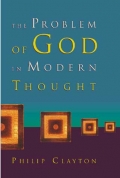
| PRODUCT TITLE | THE PROBLEM OF GOD IN MODERN THOUGHT/HC |
| ISBN NUMBER | 0802838855 |
| CATEGORY TYPE | ETHICS/PHILOSOPHY |
| AUTHOR/EDITOR | PHILIP CLAYTON |
| PUBLISHER | |
| PRODUCT Type. | |
| Summary | NA |
| FORMAT | HARDBACK |
| *price before member's discount | |

 |
|
DESCRIPTION
"...an intricate but lucid reexamination of Descartes, Spinoza, Leibniz, Kant, Fichte, and Schelling, with reference to 20th-century theologians including Tillich, Rahner, Pannenberg, and Plantinga…." - Choice
The last few decades have seen a remarkable renaissance in philosophical theology among professional theologians and within neighboring disciplines. At the same time, we are also witnessing a new interest in "spiritual questions" on the part of many who would in no way consider themselves to be theologians and, further, might not even label themselves as theists. In the excitement of this period of rebuilding and searching for new models, it becomes increasingly important not to neglect the context for modern thought about God. We may criticize modern assumptions about the divine, but we ignore them at our peril. Any theology that is to be credible in the modern (or postmodern) intellectual world must understand how and why the notion of God became a problem.
This outstanding study by Templeton Prize-winning author Philip Clayton reconstructs and evaluates the steps by which the concept of God became a problem in modern thought. Clayton shows that this development has its roots in Descartes's break with the medieval tradition, in Leibniz's failure to build a modern metaphysics of perfection, in Kant's reduction of God to a regulative concept, and in the increasing power of the Spinoza tradition as it met the challenge of German idealism and became incorporated into it. These developments provide the backdrop against which theology's prospects today can be assessed.
However, while modernity raised serious, perhaps insurmountable problems for the "perfect being theology" of the medieval period, the question of God remained a deep and abiding concern in many of the great modern philosophical systems. Clayton shows how key thinkers of the modern period continued to wrestle with the concept of God as "infinite" and "perfect" and to make fresh proposals for understanding the divine. The sophisticated models of God developed by Descartes, Leibniz, Spinoza, Fichte, and Schelling, among others, are presented, analyzed, and constructively applied to contemporary philosophical theology. Clayton's penetrating work reveals the resources that modern thought continues to offer to philosophical theologians. Ultimately, he finds in the narrative of modern thought about God strong support for panentheism, the new theological movement that maintains the transcendence of God while denying the separation of God and the world.
YOU MAY ALSO LIKE:
-

GET THE LATEST UPDATES
Be the first to know when our store is offering discounts or when your favourite authors release their new books.
-


-

GET IN TOUCH WITH US
Call us at (65) 6227 9700 or email us at enquiry@sksbooks.com and we will get back to you as soon as we can.
